Introduction
Have you ever walked into a meeting and instantly felt the team’s energy—whether it was buzzing with collaboration or weighed down by tension? That feeling isn’t random. It’s the product of invisible dynamics that shape every team’s culture, often before anyone says a word.
For HR and L&D professionals, understanding these undercurrents is essential. You can have the best processes, tools, and training, but if unseen forces like trust, power balance, or psychological safety are off, performance stalls. Culture isn’t built by slogans on the wall; it’s shaped in everyday interactions—how people make decisions, give feedback, and handle conflict.
In this article, we’ll explore the four invisible dynamics that quietly define team culture and determine whether your organization thrives or struggles. More importantly, we’ll unpack how experiential learning—like the simulation-based programs Practex delivers—helps teams not just talk about these dynamics but practice navigating them in real time. Let’s uncover what’s really driving your team beneath the surface.
Dynamic 1: The Trust Loop
Trust is the foundation of every team, yet it’s rarely discussed openly. It forms the invisible contract that determines how people share ideas, admit mistakes, or challenge one another. When trust is low, teams play it safe. When it’s high, they innovate fearlessly.
Psychological Safety in Action
Imagine a project team where junior members hesitate to speak up during problem-solving sessions. They fear judgment, so ideas stay hidden. This lack of psychological safety creates a loop—silence breeds mistrust, and mistrust deepens silence. In practice, this means great insights never surface, and mediocrity becomes the norm.
Building on this, Practex’s experiential simulations allow teams to safely test these dynamics. By practicing decisions in realistic settings, participants experience firsthand how open dialogue shifts outcomes. They see, feel, and reflect on trust in motion.
Vulnerability as a Strength
Leaders often think trust starts with competence, but it begins with vulnerability. Admitting uncertainty or asking for input signals authenticity. In team culture, this simple act can transform relationships. Here’s why that matters: people trust leaders who show they’re human, not perfect.
This leads to stronger collaboration and quicker recovery from setbacks. Practex helps leaders practice vulnerability in controlled simulations, learning how openness can drive deeper commitment and engagement.
Repairing Trust After Conflict
Even strong teams face ruptures. What defines them is how they repair trust afterward. Avoiding the issue only reinforces distance. In contrast, acknowledging impact and rebuilding through dialogue restores connection. The result? Teams grow more resilient after every challenge.
In experiential programs, participants explore these repair moments safely, practicing difficult conversations that build maturity and empathy—skills that directly translate to the workplace.
Once trust is in place, another invisible force begins shaping the culture: power. Let’s explore how power dynamics quietly influence every team’s behavior.
Dynamic 2: The Power Balance
Power dynamics exist in every team, regardless of hierarchy. It’s about who feels heard, who makes decisions, and whose voice carries weight. When power is balanced, teams thrive. When it’s skewed, creativity and ownership fade.
Formal vs. Informal Power
Think about a meeting where a senior manager defers to a confident team member for input. That’s informal power at work—earned through trust, expertise, or personality. Formal power comes from titles, but informal power often drives real influence. In practice, recognizing both helps leaders manage dynamics more intentionally.
Practex uses simulations to reveal these hidden hierarchies. When participants step into roles outside their norm, they experience how power shifts and how collaboration changes when authority is distributed differently.
Empowerment vs. Control
Leaders often confuse empowerment with loss of control. But empowerment doesn’t mean chaos—it means clarity. When people understand boundaries and purpose, they take ownership. The result? Faster decisions and stronger accountability.
This becomes even more critical in transformation contexts, like Vision 2030 initiatives, where agility matters. Practex helps organizations practice this balance, showing how empowerment fuels performance without diluting leadership authority.
Voices That Go Unheard
Every team has quieter voices—introverts, new hires, or those from different backgrounds. When those voices are overlooked, teams lose diversity of thought. Here’s why that matters: innovation depends on inclusion. Practex simulations often reveal how bias or dominance unintentionally silences perspectives that could unlock better solutions.
Building awareness of these patterns helps teams create fairer, more balanced cultures where everyone contributes meaningfully.
Once power is balanced, teams still face another invisible challenge—how they communicate. Let’s look at how patterns of conversation can unite or divide a team.
Dynamic 3: The Communication Current
Communication is more than words—it’s tone, timing, and intent. The invisible current of communication determines whether information flows freely or gets stuck in silos. When messages are clear and trust-based, teams move faster and with less friction.
The Rhythm of Dialogue
Some teams have a natural rhythm—ideas bounce, feedback flows, and everyone feels engaged. Others stumble with interruptions or long monologues that kill momentum. In practice, leaders can shape this rhythm by modeling curiosity and active listening.
Practex helps teams experiment with communication rhythms through real-time simulations, revealing how small shifts—like asking better questions—can transform team energy.
Unspoken Messages
Not all communication is verbal. Body language, tone, and even silence send signals. Imagine a leader saying “great job” with crossed arms and a flat voice. The message lands differently. Recognizing these cues helps teams interpret intent accurately and avoid unnecessary conflict.
Building on this, experiential learning gives people the chance to observe and adjust these subtle cues in a safe environment before they play out in real life.
Feedback as a Culture Shaper
Feedback isn’t a performance tool—it’s a cultural signal. When feedback is frequent and constructive, it tells people growth is valued. When it’s rare or defensive, it signals fear. The result? Either continuous improvement or quiet disengagement.
Practex embeds feedback loops into its learning experiences, allowing teams to practice giving and receiving feedback in emotionally intelligent ways that build trust rather than tension.
With communication flowing, another invisible layer comes into play—the shared meaning that binds teams together: their sense of purpose.
Dynamic 4: The Meaning Matrix
Every team operates within a web of meaning—why they do what they do, how they define success, and what they believe about their impact. When that meaning is aligned, teams feel energized. When it’s fragmented, motivation erodes.
Shared Purpose as Glue
Purpose isn’t a poster on the wall; it’s how daily work connects to a larger story. Teams thrive when they see how their efforts contribute to something meaningful. In practice, this means linking individual goals to collective outcomes.
Practex helps organizations surface this alignment by letting teams experience simulated missions where success depends on shared purpose, not individual achievement.
Values in Motion
Values only matter when they’re lived. A company may claim collaboration, but if meetings reward competition, the real value is clear. Experiential learning exposes these contradictions by translating values into behavior. The result? Teams see where alignment breaks and can rebuild it authentically.
This leads to sustainable culture change—something Practex focuses on by helping teams practice, reflect, and realign through guided debriefs.
Creating a Narrative of Belonging
Humans make sense of work through stories. When teams share a positive story about who they are and why they matter, they perform better. Leaders play a key role in shaping this story by reinforcing shared wins and learning from setbacks.
Practex encourages leaders to co-create these narratives through experiential workshops, turning abstract values into lived experiences that strengthen belonging.
Understanding meaning completes the picture of invisible dynamics. But knowing them isn’t enough—teams must learn to practice new behaviors that shift culture for good. Let’s explore how to make that happen.
Turning Awareness into Action
Awareness of invisible dynamics is powerful—but transformation happens only when teams put insight into practice. That’s where experiential learning becomes the bridge between knowing and doing.
From Insight to Behavior
Traditional training often stops at awareness. People understand concepts but struggle to apply them under pressure. Experiential learning flips that script. By simulating real decisions and consequences, teams practice new behaviors in a safe space until they become habits.
Practex designs programs precisely for this—helping leaders and teams internalize trust, communication, and collaboration through lived experience, not theory.
Feedback, Reflection, and Iteration
Behavioral change isn’t linear. It requires feedback, reflection, and iteration. In experiential settings, teams debrief their actions, identify patterns, and refine approaches. This cycle builds self-awareness and collective accountability.
Building on this, Practex’s approach ensures that every learning moment connects directly to workplace realities, making behavior change stick beyond the classroom.
Embedding New Norms
Lasting culture change happens when new behaviors become the norm. That means leaders must reinforce lessons daily—through recognition, role modeling, and structural support. In practice, this turns learning from an event into a continuous process.
Practex partners with organizations to embed these norms long-term, aligning experiential insights with performance systems and leadership practices.
When awareness turns into sustained action, invisible dynamics transform from hidden obstacles into sources of strength. The final step? Sustaining this evolution as organizations grow.
Building the Culture of the Future
The future of team culture isn’t about control—it’s about adaptability. As organizations evolve under digital transformation and national visions like Vision 2030, the ability to read and respond to invisible dynamics becomes a core leadership skill.
Adaptive Leadership
Leaders of the future must navigate uncertainty with empathy and clarity. They need to sense shifts in trust, power, communication, and meaning—and respond in real time. Experiential learning develops this agility by letting leaders practice adaptive decision-making in simulated environments.
The result? Leaders who can guide culture rather than react to it—a key focus of Practex’s leadership development experiences.
Data Meets Human Insight
Technology now allows teams to measure engagement, collaboration, and psychological safety. But data alone doesn’t change behavior. Combining analytics with experiential insight helps leaders interpret signals and act meaningfully. Here’s why that matters: culture is both measurable and human.
Practex helps organizations connect metrics to real behaviors, ensuring data-driven strategies translate into people-driven outcomes.
Sustaining Culture Through Practice
Culture isn’t a one-time project—it’s a daily practice. Teams that regularly revisit their invisible dynamics stay resilient and aligned, even through change. Continuous experiential learning keeps these muscles strong, turning awareness into instinct.
This continuous practice is at the heart of Practex’s philosophy: putting theory into practice to build cultures that thrive under pressure.
With this forward-looking mindset, let’s bring it all together and consider how to act on these insights today.
Moving Forward
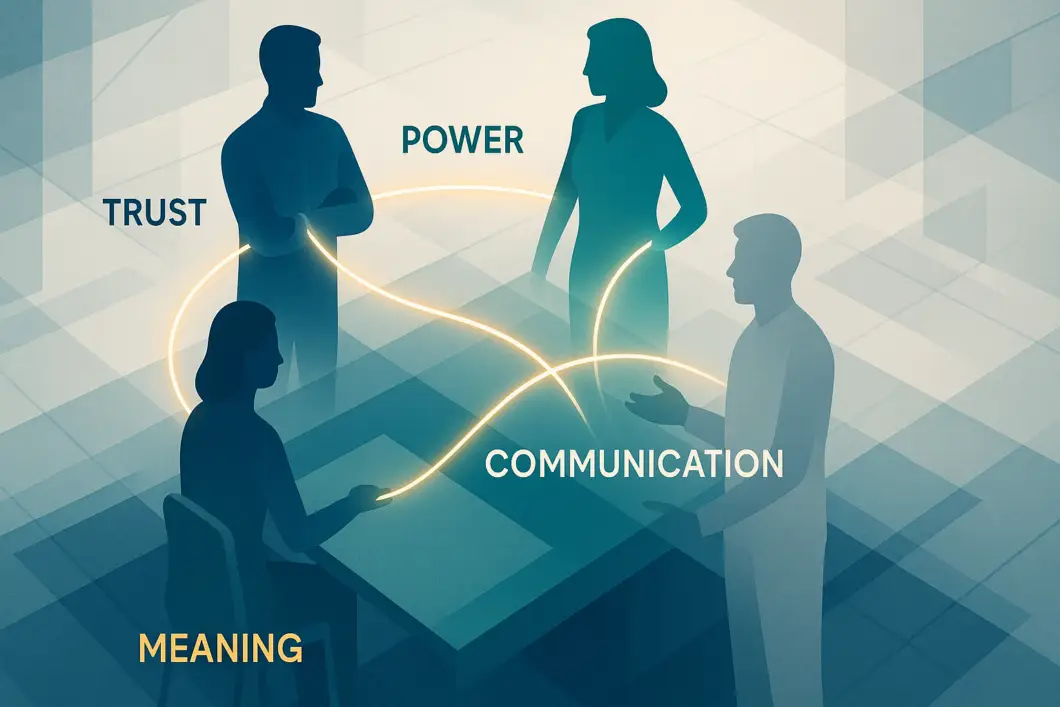
Every team culture is shaped by invisible dynamics—trust, power, communication, and meaning. When left unchecked, they can quietly erode performance. But when understood and practiced, they become powerful levers for growth, alignment, and innovation.
Experiential learning is the key to making the invisible visible. By practicing real decisions in safe, simulated environments, teams gain awareness and agility that no theory alone can provide. Practex helps organizations across Egypt, KSA, and the UAE turn cultural insight into behavioral change that lasts.
Ready to transform how your teams learn and lead? Connect with Practex to design experiential programs that help your people master these invisible dynamics and build a culture where trust, empowerment, and purpose thrive every day.