
Building Confidence in Uncertainty: How Adaptive Leaders Learn to Lead When the Path Isn’t Clear
When the Plan Disappears, Leadership Is What People Look For
Imagine this: your organization faces a sudden market disruption. The strategy that worked last quarter now feels obsolete. Your team looks to you for direction — but no one has the full picture.
In moments like these, what separates resilient organizations from reactive ones isn’t the clarity of the plan; it’s the confidence of the people leading through the fog.
Adaptive leadership has become a defining capability for modern organizations. In times of uncertainty — whether driven by technological change, economic shifts, or organizational transformation — leaders must inspire confidence not through certainty, but through trust, agility, and learning.
For HR and L&D leaders, this raises a critical question:
How do we help leaders build adaptive confidence — not just talk about it?
Adaptive Leadership Is About Staying Effective When You Don’t Have the Answers
Adaptive leadership isn’t about predicting the future. It’s about staying effective when the future cannot be predicted.
Traditional leadership models often equate confidence with control. But in complex environments, control is limited. Adaptive leaders respond differently — they lead with curiosity, invite exploration, and create psychological safety by acknowledging uncertainty rather than hiding it.
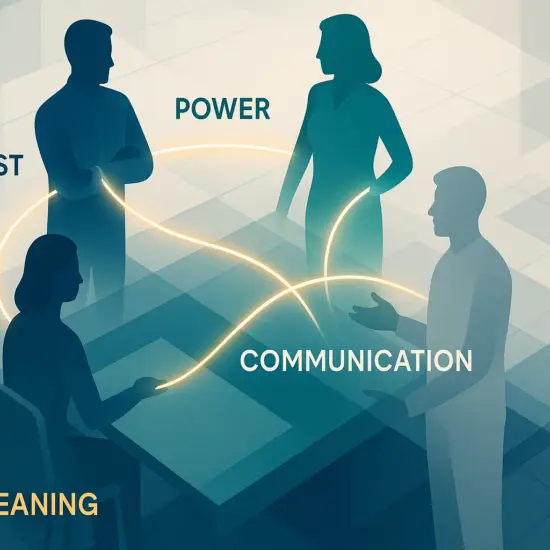
This shift transforms uncertainty from a personal burden into a shared challenge. When leaders communicate openly and connect authentically with their teams, confidence becomes collective. Teams feel aligned, empowered, and capable of acting even without perfect clarity.
Why Uncertainty Shakes Leader Confidence More Than We Admit
Uncertainty challenges more than strategy — it challenges psychology.
Leaders often feel pressure to appear certain, fearing that transparency will undermine authority. In reality, the opposite is true. Overconfidence erodes trust when reality shifts, while honest conviction strengthens it.
At the same time, uncertainty creates emotional strain: decision fatigue, self-doubt, and fear of failure. Without structured reflection or peer learning, these pressures accumulate, reducing effectiveness over time.
Many organizations attempt to address this through traditional training. Yet knowledge alone rarely changes behavior. Confidence doesn’t come from knowing what to do — it comes from practicing decisions in context and seeing skills work under pressure.
Why Confidence Grows Faster Through Experience Than Through Explanation
Adaptive confidence cannot be developed through theory alone. It must be experienced.
Simulations provide leaders with safe environments to make real decisions, test judgment, experience consequences, and adjust — all without real-world risk. Through repeated cycles of action, feedback, and reflection, confidence becomes grounded in lived experience.
At Practex, experiential learning is designed to mirror the complexity of real organizational challenges. Immediate feedback and guided reflection help leaders transform experience into insight, strengthening self-trust and adaptability.
Over time, this practice builds behavioral “muscle memory” — enabling leaders to communicate clarity, balance risk, and act decisively even when the path forward is unclear.
How Organizations Turn Individual Confidence Into Collective Resilience
Confidence in uncertainty isn’t built in a single intervention. It’s cultivated over time.
Organizations that succeed embed experiential learning into leadership development, team programs, and transformation initiatives. Learning is designed to reflect real challenges, reinforced through feedback loops, and supported by cultures that reward experimentation and learning — not just outcomes.
When leaders and teams learn together, confidence becomes collective. Shared experience creates trust, alignment, and resilience that extends beyond individual roles.
What It Takes to Sustain Confidence When Change Never Slows Down
In uncertain times, confidence is not the absence of doubt — it’s the presence of trust, learning, and adaptability.
Adaptive leaders build confidence by creating environments where people can experiment, reflect, and grow together. Experiential learning turns uncertainty into a powerful learning ground, where leadership capability is practiced — not prescribed.
What Comes Next for Adaptive Leaders
In a world where change is constant and certainty is rare, the most valuable leadership capability is not having the right answers, but having the confidence to move forward, learn, and adapt. Organizations that invest in helping leaders practice decision-making, reflection, and communication under uncertainty don’t just prepare for disruption — they build resilience into their culture. When leaders learn to navigate ambiguity together, uncertainty stops being a threat and becomes a shared space for growth, innovation, and momentum.